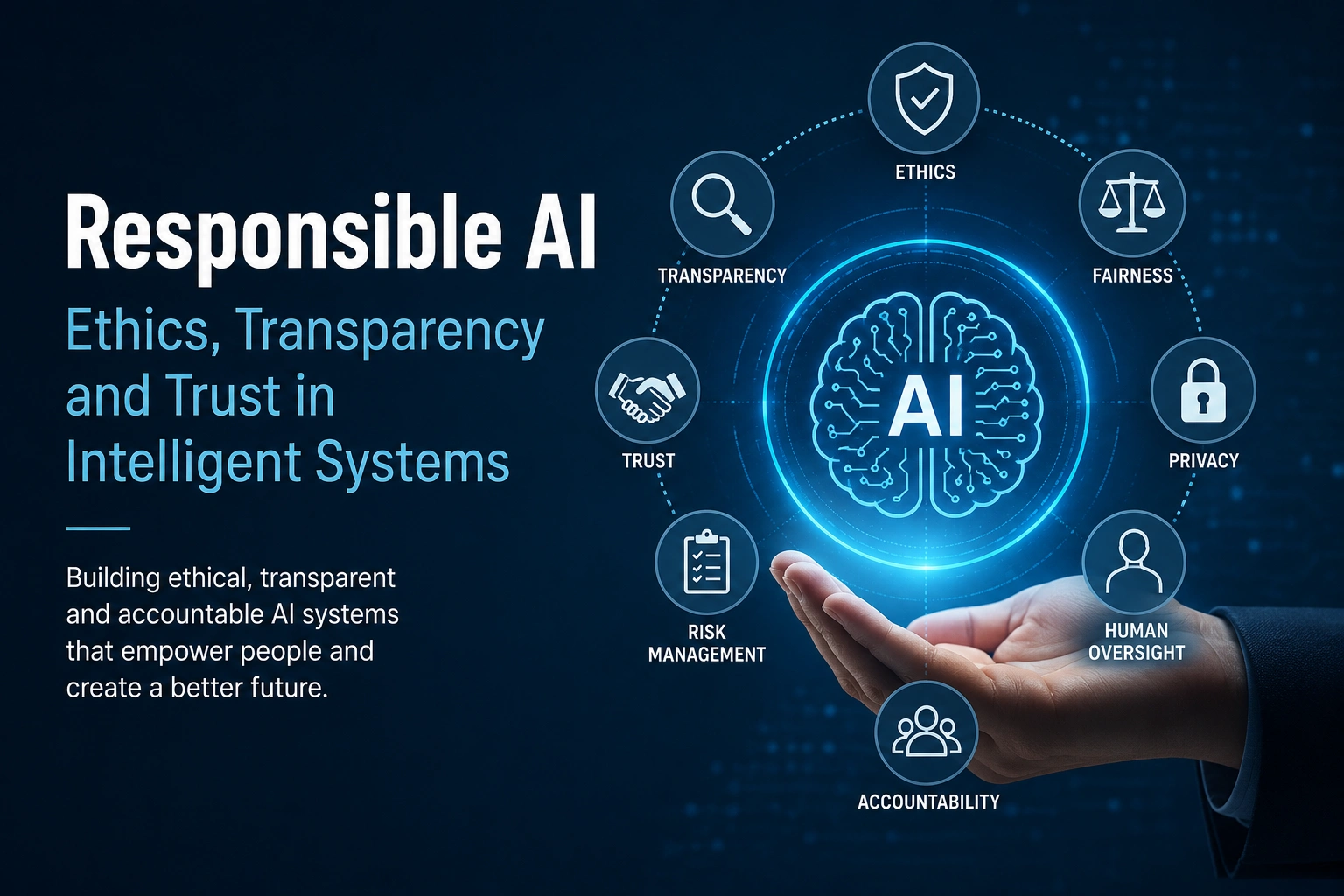
AI can prepare drafts, summaries, analysis, code, images, and customer-facing material quickly. It cannot take responsibility for whether the result is true, appropriate, lawful, safe to share, or suitable for a real-world decision. That responsibility remains with the person or organization using it.
A human review checklist for AI outputs creates a consistent final-control process. It helps reviewers identify factual errors, missing context, confidentiality problems, unfair assumptions, misleading certainty, and material that should not be published or acted upon.
The right level of review depends on the task. A short internal brainstorming note may need a light edit. An output that affects customers, employees, money, health, legal rights, safety, or public trust requires a more careful review by someone with relevant authority.
Start With the Intended Use
Before reviewing individual sentences, establish what the output is supposed to do.
Ask:
- What decision, communication, or action will this support?
- Who will receive or rely on it?
- What could happen if it is wrong, incomplete, or misunderstood?
- Is AI being used for a draft, a recommendation, or a final decision?
- Does the reviewer have the subject knowledge needed to judge it?
This first step prevents a common failure: reviewing only grammar when the real issue is whether the output should be used at all.
AI should support professional judgment, not replace it. That distinction is especially important when an output influences hiring, performance management, lending, insurance, healthcare, legal matters, benefits, safety, or other consequential decisions.
Human Review Checklist for AI Outputs
Use the following checks before sharing, publishing, submitting, or acting on AI-assisted work.
1. Confirm factual accuracy
AI can state incorrect information with confidence. Review every fact that matters to the purpose of the work.
Verify:
- Names, titles, dates, locations, figures, and calculations
- Product details, prices, policies, specifications, and availability
- Historical claims and descriptions of current events
- Technical instructions and procedural steps
- Legal, medical, financial, or regulatory statements
- Quotations, citations, and attributed viewpoints
Do not assume that a polished explanation is supported by evidence. Open the original source where possible, and correct or remove claims that cannot be verified.
2. Check whether the answer is complete
An answer can be accurate yet still create a bad outcome because it leaves out a necessary qualification, exception, limitation, or next step.
Review whether the output:
- Addresses the actual task rather than a narrower version of it
- Includes essential conditions and exceptions
- Distinguishes confirmed facts from estimates or interpretation
- Identifies information that remains unknown
- Gives enough context to prevent a misleading conclusion
- Avoids presenting one possible option as the only option
Completeness matters most when readers may act on the information without access to the original discussion or evidence.
3. Test the reasoning and calculations
For analytical work, examine the path to the conclusion rather than checking only the final answer.
Confirm that:
- Inputs are correct and current
- Assumptions are reasonable and visible
- Units, dates, currencies, and percentages are handled consistently
- Calculations can be independently reproduced
- A conclusion follows from the available evidence
- Uncertainty has not been converted into false confidence
A reviewer should redo important calculations independently. If the reasoning cannot be explained clearly, the output should not be treated as dependable.
4. Review sources, citations, and quotations
AI may invent a citation, confuse two sources, misstate a publication, or place a real quotation in the wrong context.
Check that:
- Every cited source exists
- The source supports the claim it is attached to
- The source is credible for the subject
- Links lead to the intended page
- Quotations are exact and retain their original meaning
- Publication dates are relevant to the claim
- Primary sources are used when they are available
This is closely connected to information quality. Reliable work requires more than an answer that sounds plausible; it requires evidence that can withstand review.
5. Protect confidential and personal information
Review both the material submitted to the AI tool and the output it produces.
Do not approve content that exposes:
- Personal identifiers or private contact details
- Customer, employee, patient, student, or client records
- Passwords, access keys, security details, or internal system information
- Confidential contracts, financial data, or unreleased business plans
- Privileged legal communications
- Sensitive details that could identify a person indirectly
AI output can also repeat confidential information in a broader or more visible form than intended. Remove sensitive material before distribution and follow the organization’s approved data-handling rules. For a practical boundary, review what data should never be entered into AI tools.
6. Check for fairness, harm, and inappropriate assumptions
AI can reproduce stereotypes, overlook affected groups, or recommend an approach that is inappropriate in context.
Ask:
- Does the output make assumptions about a person or group without evidence?
- Does it use biased, exclusionary, disrespectful, or stigmatizing language?
- Could it disadvantage someone unfairly?
- Does it treat a complex human situation as a simple classification problem?
- Does it give advice that could cause foreseeable harm?
- Does it need a qualified expert to assess the risk?
Reviewers should pay particular attention to material involving protected characteristics, vulnerable people, access to services, disciplinary actions, and safety-sensitive situations.
7. Confirm legal, policy, and rights compliance
A useful output still requires approval against applicable rules.
Review:
- Internal policies and brand standards
- Contractual obligations
- Copyright, trademark, licensing, and permission requirements
- Disclosure requirements for sponsored, regulated, or public-facing material
- Industry-specific professional duties
- Records-retention and documentation rules
AI-generated text, images, and code should not be assumed to be free of rights concerns. When ownership, licensing, or compliance is uncertain, pause the workflow and obtain appropriate guidance.
8. Assess clarity, audience fit, and tone
The reviewer should ensure that the final material works for the people who will receive it.
Check whether it:
- Uses language the intended audience can understand
- Explains necessary terms without talking down to readers
- Reflects the correct tone for the situation
- Avoids exaggerated claims and unnecessary certainty
- Separates facts, recommendations, and opinions
- Includes a clear next step when one is required
- Removes repetition, generic wording, and unsupported promises
Good editing is not merely cosmetic. Clear language reduces the risk that readers misunderstand a decision or act on an incomplete message.
9. Decide whether human approval is enough
Some AI-assisted work can be approved after ordinary review. Other work requires a second reviewer, specialist review, or a decision not to use the output.
Escalate when the output includes:
- High-impact recommendations or decisions
- Uncertain legal, medical, financial, or technical advice
- Sensitive personal information
- Safety risks
- Material reputational consequences
- Unverified claims that cannot be resolved quickly
- Conflicting evidence
- Signs of bias, discrimination, manipulation, or fraud
An escalation path should name the role responsible for the final decision. “A human reviewed it” is not meaningful unless the reviewer had the knowledge and authority to identify the relevant risk.
A Simple Approval Workflow
A practical workflow can be kept short:
- Define the purpose and risk level.
- Check facts, evidence, calculations, and completeness.
- Review privacy, rights, fairness, policy, and safety.
- Edit for context, clarity, and audience fit.
- Approve, revise, escalate, or reject the output.
- Record material changes and approval decisions for higher-risk work.
For recurring tasks, teams can adapt this checklist into a review form with required fields for reviewer name, date, source verification, risk level, changes made, and final status. That record helps organizations learn from repeated failures and apply consistent standards over time.
Review Should Match the Consequence
Not every AI output needs the same amount of effort. A low-risk first draft may only need an editor to confirm accuracy and tone. A customer-facing statement may require fact checking and brand approval. A recommendation that affects a person’s opportunities, finances, health, legal position, or safety requires meaningful human judgment before any action is taken.
The central principle is simple: review the consequence, not just the format. A short message can be high risk, while a long draft can be low risk. The amount of human oversight should reflect what is at stake.
Final Thoughts
AI can accelerate work, but speed does not establish reliability. A structured human review process makes the final result more accurate, safer to share, more respectful of affected people, and easier to defend.
The best use of AI is not automatic approval. It is informed human judgment supported by a clear, repeatable standard.