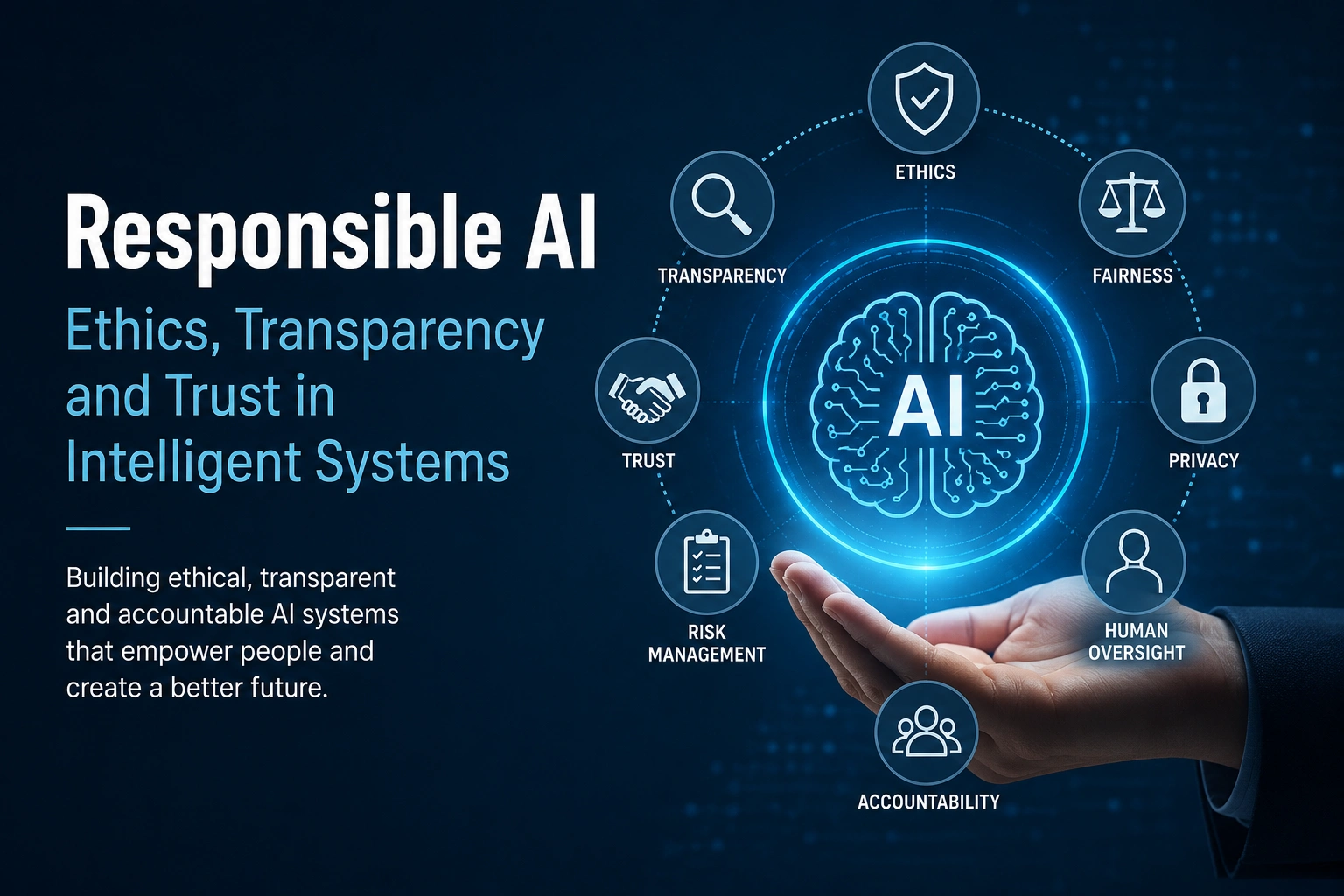
An AI readiness assessment for small business is a structured review of whether a company has a worthwhile problem to solve, reliable enough information, safe working practices, and the capacity to use an AI tool responsibly.
Readiness does not mean having a large technology budget or a data-science team. A small business can be ready for a limited, well-controlled use such as organizing internal knowledge, drafting first versions of routine communications, summarizing non-sensitive meeting notes, or identifying patterns in operational records. It is not ready when the proposed use has no clear owner, no measurable benefit, or unacceptable privacy and accuracy risks.
The purpose of an assessment is to prevent expensive enthusiasm from becoming an unmanageable tool subscription, an unreliable workflow, or a trust problem with customers and employees.
Start with one business problem
A useful assessment begins with a specific operational problem—not with a tool.
Choose a task that is repetitive, time-consuming, clearly documented, and still reviewed by a person. For example:
- Turning approved product information into first drafts of descriptions
- Sorting and summarizing non-confidential customer feedback
- Preparing a first-pass weekly sales summary from clean records
- Routing common internal questions to an approved knowledge base
- Extracting fields from standardized documents, with human verification
Avoid beginning with decisions that can materially affect a person’s job, credit, insurance, health, legal position, or access to services. These uses require a much stronger risk review, reliable testing, and appropriate professional oversight.
State the opportunity in one sentence:
“Reduce the time needed to prepare the weekly inventory summary while keeping the manager responsible for checking every final figure.”
That statement identifies the workflow, the intended benefit, and the human control. It also makes later measurement possible.
AI supports a wider digital transformation effort only when it improves a real process. Adding software without changing a bottleneck rarely produces durable value.
Assess the workflow before assessing the tool
A workflow is a strong candidate when it meets most of these conditions:
- The steps are reasonably consistent.
- Staff can explain what a good result looks like.
- Mistakes can be detected before an output is used.
- The task occurs often enough to justify setup and review time.
- A person remains accountable for the final decision or communication.
- The company can measure time saved, errors reduced, or service improved.
A workflow is a weak candidate when instructions change constantly, the input is mostly informal judgment, the outcome is difficult to verify, or a mistake could cause serious harm. In those cases, process improvement, staff training, or better recordkeeping may create more value than AI.
Check whether the information is fit for use
AI can make messy information easier to summarize, but it does not make unreliable information correct. Before using company data, answer these questions:
- Is the information current?
- Is there one approved source for important facts?
- Are records complete enough for the intended task?
- Can someone identify who owns and updates the information?
- Does the material contain personal, financial, health, legal, or confidential business information?
- Is the data permitted to be used with the selected service under its contract and settings?
A restaurant with a current menu, approved allergen records, and clear pricing may use AI to create a staff-facing draft of customer replies. It should not let an unreviewed system answer allergy questions directly to customers.
A contractor with consistently coded estimates may experiment with summarizing project costs. If estimates are scattered across emails, spreadsheets, and handwritten notes with inconsistent categories, improving the records comes first.
The principle is simple: the output cannot be more dependable than the instructions, source material, and review process behind it.
Review security, privacy, and vendor controls
Small businesses do not need to become security specialists before every limited trial. They do need to know what they are sharing and where it goes.
Before entering business information into an AI service, confirm:
- Whether prompts and uploaded files are used to train the provider’s models
- Whether an administrator can control access and remove former employees
- Whether multi-factor authentication is available
- Where data is stored and how long it is retained
- Whether the provider offers a business agreement and appropriate privacy terms
- Whether confidential information can be excluded, anonymized, or minimized
- Whether staff know which information must never be entered
Do not paste client records, passwords, payment details, private employee information, nonpublic financial results, or confidential contracts into a public consumer tool without explicit authorization and suitable protections.
Security is not a separate technical issue. It is part of whether the project is viable. The same applies to fairness, transparency, and accountability, which are central to responsible AI.
Evaluate people, ownership, and training
A small business can begin with a modest level of technical skill, but it cannot begin without ownership.
Assign three roles, even if one person fills more than one:
- Business owner: decides why the work matters and what success means.
- Workflow owner: understands the daily process and checks whether outputs are useful.
- Approver: has authority to stop the trial if accuracy, privacy, or customer-impact concerns appear.
Staff should know that AI output is a draft or recommendation unless a process explicitly says otherwise. They need practical training on checking facts, identifying invented details, protecting sensitive information, and escalating uncertain cases.
An effective policy can be brief. It should say which tools are approved, what information is prohibited, when human review is required, and where employees should report an error. A clear AI acceptable-use policy for employees turns general caution into consistent daily practice.
Use a simple readiness score
Score each area from 0 to 2.
|
Area |
0 points |
1 point |
2 points |
|
Business value |
No defined problem |
Possible benefit, not measured |
Specific result and measure defined |
|
Workflow clarity |
Steps are unclear |
Some steps are documented |
Repeatable steps and quality standard exist |
|
Information quality |
Incomplete or unreliable |
Usable but inconsistent |
Current, owned, and suitable for the task |
|
Privacy and security |
Unknown or unmanaged |
Basic controls considered |
Approved controls and limits are documented |
|
Human oversight |
No review plan |
Informal checking |
Named reviewer and escalation process |
|
Staff capability |
No training or owner |
Interested staff, limited guidance |
Owner assigned and practical training complete |
|
Measurement |
No baseline |
General expectation |
Baseline, target, and review date set |
0–5: Prepare first. Improve the workflow, records, or safeguards before using AI.
6–10: Run a narrow pilot. Select a low-risk task, limit the information shared, and keep all final decisions with a person.
11–14: Ready for a controlled rollout. Expand only after the pilot meets its quality, security, and value targets.
A score is not a certification. It is a way to make gaps visible and prioritize the next sensible action.
Design a controlled pilot
A good pilot is small enough to stop easily and structured enough to learn from.
Set these boundaries before launch:
- One workflow
- One team or a small group of users
- One approved tool
- A defined start and end date
- A limited set of permitted inputs
- A named human reviewer
- A success measure and a stop condition
For example, a property-management company may test AI-assisted first drafts of maintenance-status updates for 30 days. Staff use only approved work-order details, remove tenant identifiers where possible, review every outgoing message, and compare preparation time with the previous month. The pilot stops if factual errors exceed an agreed threshold or sensitive details appear in drafts.
This approach protects customers and employees while giving the business a real basis for deciding whether to continue.
Measure outcomes that matter
Measure the result against the original problem. Useful indicators include:
- Minutes required per completed task
- Error or correction rate
- Percentage of outputs accepted after review
- Customer response time
- Backlog size
- Employee satisfaction with the workflow
- Cost per completed task
- Number and severity of privacy or security incidents
Do not treat the number of prompts, generated pages, or tool logins as evidence of success. Those figures show activity, not business value.
If the tool saves time but creates enough checking work to cancel the benefit, redesign the process or end the experiment. Stopping an unproductive use is a good assessment outcome.
Decide whether to expand, adjust, or stop
At the end of the pilot, document what happened:
- What task was tested?
- What information was used?
- What quality checks were applied?
- What benefit was measured?
- What errors or risks appeared?
- What changed for staff or customers?
- What must be fixed before expansion?
Expand only when the benefit is repeatable, the error rate is acceptable, safeguards are working, and the responsible owner supports the next stage. Keep the same review discipline as usage grows; new teams, new data, and new customer-facing activities can introduce new risks.
Frequently asked questions
Does a small business need a large data set to use AI?
No. Many practical uses rely on clear instructions, approved reference material, and a repeatable workflow rather than a large proprietary data set. Reliable inputs and human checking matter more than volume.
What is the safest first AI project for a small business?
A low-risk internal task with clear source material and mandatory human review is usually the safest starting point. Examples include drafting internal summaries, organizing non-sensitive feedback, or creating first drafts from approved business information.
How long should an AI readiness assessment take?
For one clearly defined use, a small business can complete an initial assessment in a few focused sessions. The time should be spent understanding the workflow, information limits, approval process, and measurement plan—not comparing a large number of tools.
Can AI replace employee review?
Not for work where accuracy, customer trust, legal obligations, or material decisions are involved. AI can support preparation and analysis, but the business should maintain clear human responsibility for final outputs and decisions.
A sound assessment gives a small business a practical answer: proceed with a limited pilot, fix the foundations first, or reject the use because the risk outweighs the likely benefit. That discipline is more valuable than adopting AI quickly.