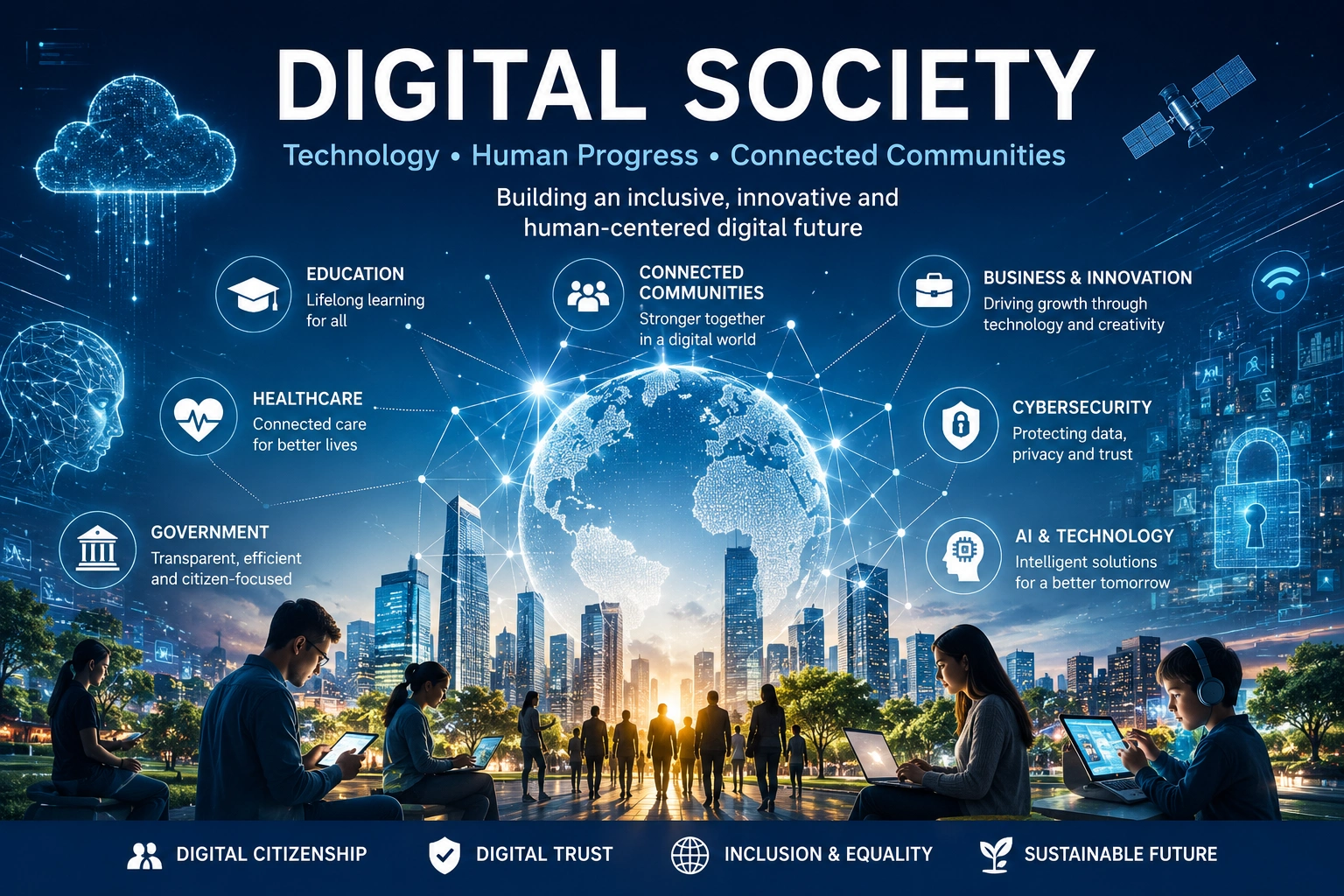
Digital information has become the infrastructure behind modern decision-making. Businesses evaluate markets through data, researchers build on published findings, governments communicate with citizens through digital platforms, educators rely on online knowledge resources, and search technologies continuously organize information for billions of users. In every one of these environments, the quality of information determines whether knowledge creates confidence or confusion.
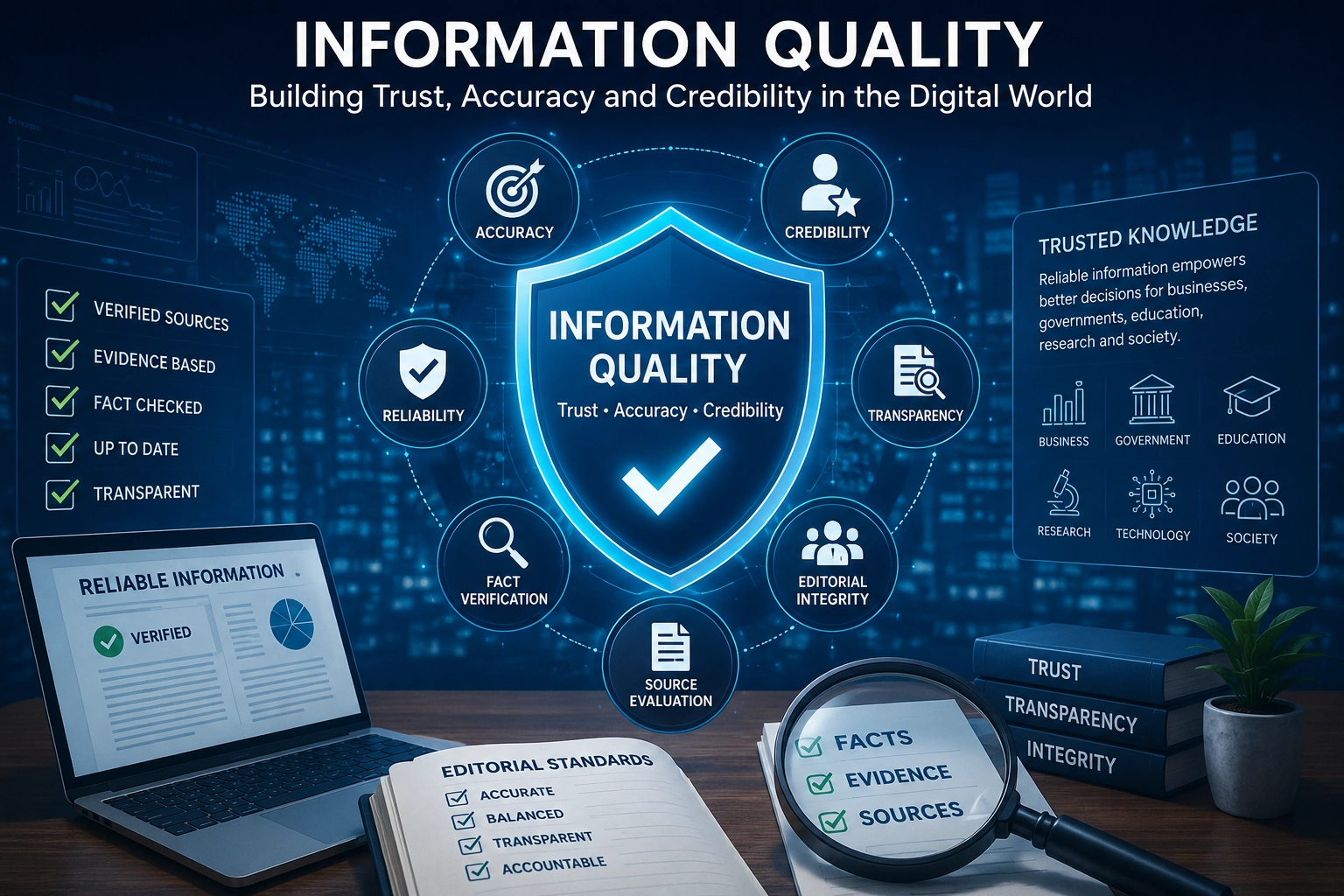
Information Quality is therefore more than a publishing objective. It is the foundation of trustworthy digital ecosystems where facts remain verifiable, evidence is transparent, sources are accountable, and knowledge can be reused with confidence. As Artificial Intelligence, AI Search, information retrieval systems, and digital publishing platforms become increasingly interconnected, high-quality information influences not only what people read but also what intelligent systems learn, summarize, recommend, and preserve.
Organizations that consistently produce accurate and well-governed information strengthen long-term credibility. Those that neglect information quality risk damaging public trust, weakening institutional authority, and allowing misinformation to spread more easily across digital networks.
Information Quality as Digital Infrastructure
Every digital service depends on information moving between creators, platforms, technologies, and audiences. Search engines index it, AI models analyze it, businesses interpret it, and individuals rely on it for everyday decisions.
Poor-quality information creates downstream problems throughout this ecosystem. Incorrect facts can influence automated recommendations, outdated material can distort research, incomplete documentation can affect operational decisions, and unclear attribution can reduce confidence in otherwise valuable knowledge.
High-quality information creates the opposite effect. It supports reliable discovery, improves consistency across digital platforms, enables meaningful collaboration, and strengthens confidence in digital communication over time.
Rather than viewing information as isolated content, modern organizations increasingly treat it as strategic infrastructure that requires governance, maintenance, and continual improvement.
Accuracy Is Only One Dimension of Quality
Accurate information is essential, but accuracy alone does not guarantee quality.
Strong information also demonstrates:
- Context appropriate to the subject
- Complete and balanced coverage
- Clear attribution of evidence
- Logical consistency
- Current relevance
- Transparent editorial responsibility
A technically accurate statement presented without context may still mislead readers. Likewise, correct information that lacks evidence or omits important qualifications can reduce confidence even when individual facts remain true.
Information Quality therefore evaluates the entire knowledge experience rather than isolated factual correctness.
Credibility Is Earned Through Transparent Publishing
Readers increasingly evaluate not only what information says but also why they should trust it.
Credibility develops when publishers consistently demonstrate responsible editorial practices, including:
Clear Attribution
Reliable publications distinguish original reporting, expert analysis, referenced material, and editorial opinion without creating ambiguity.
Editorial Accountability
Organizations that publish corrections, update outdated material, and explain editorial processes demonstrate a commitment to continuous accuracy rather than absolute perfection.
Consistent Standards
Trust grows when editorial expectations remain stable across every publication rather than varying according to popularity or commercial pressure.
Over time, transparency becomes a stronger indicator of credibility than promotional claims about authority.
Reliability Depends on Long-Term Consistency
Reliable information remains dependable beyond the moment it is published.
This requires systems that ensure:
- Regular content reviews
- Version management
- Ongoing verification
- Editorial oversight
- Consistent terminology
- Stable publishing practices
Reliability transforms information into a dependable reference rather than temporary content designed only for immediate visibility.
For organizations managing extensive digital libraries, reliability often becomes a competitive advantage because audiences learn which sources consistently maintain accurate knowledge over time.
Editorial Integrity Protects Public Confidence
Editorial integrity represents the principles that guide how information is created, reviewed, updated, and presented.
Strong editorial environments separate evidence from assumptions, clearly distinguish reporting from interpretation, and avoid manipulating information to achieve predetermined conclusions.
Integrity also requires resisting incentives that encourage sensationalism, selective presentation, or unsupported certainty.
When editorial integrity becomes an organizational value rather than an individual responsibility, information quality improves across every stage of publication.
Evaluating Sources Before Information Becomes Knowledge
Every published statement originates from a source, making source evaluation one of the most important elements of Information Quality.
Effective evaluation considers questions such as:
- Is the source identifiable?
- Does the source possess relevant expertise?
- Can the information be independently verified?
- Is supporting evidence available?
- Has the information remained consistent across reliable references?
- Are important limitations acknowledged?
High-quality publishing rarely depends on a single source. Instead, it builds confidence through corroboration, careful interpretation, and transparent attribution.
This disciplined approach reduces the likelihood that unsupported claims become accepted knowledge.
Fact Verification as an Ongoing Process
Fact verification is often misunderstood as a final editorial checklist.
In reality, verification occurs throughout the publishing lifecycle.
Before Publication
Evidence is evaluated, terminology is confirmed, references are reviewed, and factual consistency is established.
During Publication
Editorial workflows ensure that revisions preserve factual integrity while improving clarity and readability.
After Publication
New evidence, updated standards, or changing circumstances may require corrections or revisions to maintain long-term accuracy.
Continuous verification reflects responsible knowledge stewardship rather than reactive error correction.
Evidence-Based Publishing Strengthens Digital Authority
Evidence-based publishing prioritizes verifiable information over unsupported assertions.
This approach encourages publishers to:
- Reference established knowledge where appropriate
- Differentiate evidence from interpretation
- Acknowledge uncertainty honestly
- Avoid exaggeration
- Present balanced analysis
Evidence-based publishing is especially important in technology, Artificial Intelligence, business, education, healthcare, scientific research, and public policy, where inaccurate information may influence significant decisions.
Organizations recognized for evidence-based publishing often develop stronger institutional authority because readers learn that conclusions are supported rather than assumed.
Digital Publishing Standards Shape Discoverability
Modern publishing standards influence how information is interpreted by both humans and intelligent technologies.
Well-structured content supports:
- Better information retrieval
- Improved search engine understanding
- More accurate AI Search responses
- Enhanced accessibility
- Consistent metadata
- Efficient knowledge organization
Digital Publishing therefore combines editorial quality with technical clarity.
Information that is difficult to interpret structurally may become less discoverable even when its factual quality remains high.
Information Governance Creates Sustainable Knowledge
As organizations publish thousands of documents across multiple platforms, governance becomes essential.
Information governance establishes policies for:
Ownership
Defining responsibility for maintaining information quality throughout its lifecycle.
Review Cycles
Ensuring published knowledge remains accurate as industries evolve.
Classification
Organizing information consistently for efficient retrieval and management.
Version Control
Preventing outdated or conflicting information from remaining publicly accessible.
Governance transforms information from isolated publications into a coordinated knowledge system capable of long-term maintenance.
Information Quality in Artificial Intelligence
Artificial Intelligence increasingly depends on high-quality digital knowledge.
AI systems retrieve, summarize, organize, and generate responses based on available information. When underlying information lacks accuracy, transparency, or credibility, downstream outputs become less reliable regardless of technological sophistication.
High-quality information improves:
- AI Search relevance
- Information retrieval accuracy
- Knowledge synthesis
- Contextual understanding
- Citation reliability
- Decision support
As AI becomes more deeply integrated into digital workflows, Information Quality becomes an essential input for trustworthy intelligent systems rather than merely a publishing objective.
Search Visibility Begins With Trustworthy Information
Search engines increasingly evaluate signals that reflect overall content quality rather than isolated keyword optimization.
Publications that consistently demonstrate expertise, editorial integrity, topical depth, and factual reliability are better positioned to build sustainable visibility over time.
Strong Information Quality also supports:
- Better topical authority
- Improved semantic relationships
- Higher user confidence
- More meaningful engagement
- Long-term search resilience
Rather than optimizing for algorithms alone, trustworthy publishers optimize for durable knowledge that remains valuable regardless of evolving ranking systems.
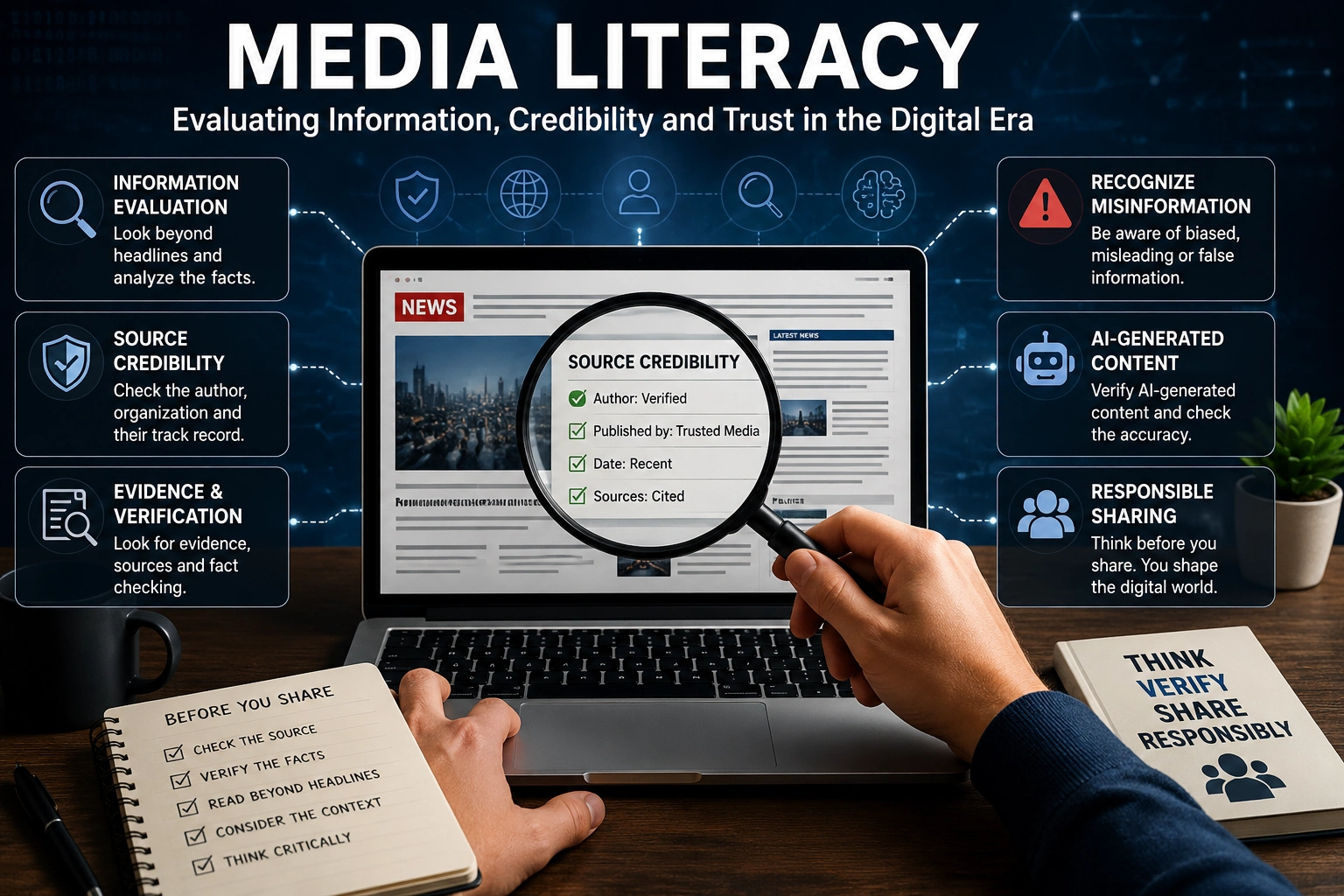
Media Literacy and Information Quality Reinforce Each Other
Information Quality and Media Literacy operate as complementary forces.
Publishers improve the quality of available knowledge, while audiences develop stronger abilities to evaluate credibility, recognize reliable sources, and distinguish evidence from unsupported claims.
Together, they strengthen Digital Trust by encouraging informed decision-making throughout society.
Neither can fully succeed without the other.
Content Governance Supports Organizational Reputation
Organizations increasingly recognize information as a strategic asset rather than a collection of independent publications.
Content Governance establishes standards that maintain consistency across websites, documentation, research libraries, internal knowledge bases, customer resources, and public communications.
Strong governance helps organizations:
- Maintain brand credibility
- Reduce contradictory information
- Improve collaboration
- Strengthen regulatory readiness
- Support institutional memory
- Preserve knowledge quality over time
As digital operations expand, governance becomes increasingly important for maintaining reliable information at scale.
Information Quality Across Critical Sectors
Business
Reliable information supports strategic planning, customer communication, operational efficiency, and responsible decision-making.
Government
Public confidence depends on transparent, accurate, and consistently maintained information that enables informed civic participation.
Education
Learning environments require dependable knowledge that encourages critical thinking rather than misinformation.
Research
Research advances through reproducible evidence, transparent methodology, and accurate scholarly communication.
Technology
Digital platforms, software systems, search technologies, and AI applications all perform better when built upon trustworthy information resources.
Across every sector, Information Quality strengthens institutional credibility while reducing uncertainty.
The Future of Trusted Digital Knowledge
Digital information ecosystems will continue expanding as AI, automation, intelligent search, and global digital publishing evolve.
Success will increasingly depend on organizations that invest in trustworthy editorial practices instead of simply producing larger volumes of content.
Future information ecosystems are likely to emphasize:
- Greater transparency
- Better knowledge governance
- Improved verification processes
- Stronger editorial accountability
- Higher-quality information retrieval
- Responsible AI integration
Information Quality will remain central to these developments because trustworthy technology ultimately depends on trustworthy knowledge.
Frequently Asked Questions
Why is Information Quality becoming more important in AI-powered search?
AI-powered systems increasingly retrieve, summarize, and synthesize existing information. High-quality source material improves the reliability, context, and trustworthiness of generated responses while reducing the risk of amplifying inaccurate or outdated information.
How does Information Quality differ from content quality?
Content quality often focuses on readability, usefulness, and presentation. Information Quality extends further by evaluating factual accuracy, source credibility, editorial integrity, evidence, governance, consistency, and long-term reliability.
Can accurate information still have poor Information Quality?
Yes. Information may be factually correct yet lack context, transparency, attribution, editorial review, or supporting evidence. High Information Quality requires multiple dimensions working together rather than factual accuracy alone.
Why does Information Quality matter for organizational reputation?
Organizations earn trust when stakeholders consistently encounter reliable, well-maintained, and transparent information. Strong Information Quality strengthens credibility across customers, partners, researchers, regulators, and the wider public.