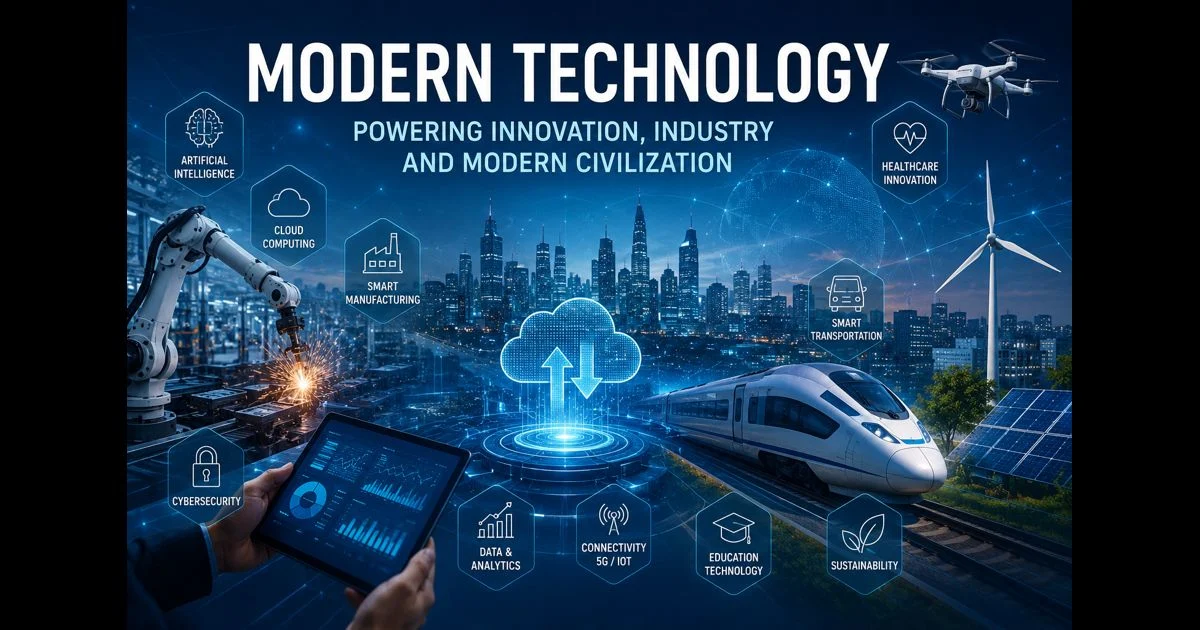
Cloud Computing has become the operational foundation of the modern digital economy. Rather than treating computing power as a fixed physical asset, organizations now consume infrastructure, storage, networking, and software resources as flexible services that expand or contract according to demand. This shift has transformed how businesses innovate, governments deliver digital services, researchers process information, and developers build applications for a connected world.
The significance of cloud computing extends far beyond reducing hardware investments. It has redefined how digital infrastructure is designed, how software reaches users, and how organizations maintain resilience in an environment where uninterrupted access to data and services is expected. Whether supporting global collaboration, powering artificial intelligence workloads, enabling digital transformation, or improving business continuity, cloud computing has become an essential layer beneath nearly every modern technology ecosystem.
As digital services continue to evolve, cloud computing is increasingly viewed as strategic infrastructure rather than simply another IT deployment model. Organizations that understand its architectural role are better positioned to adapt to technological change without rebuilding their digital foundations.
Cloud Infrastructure Has Become a Strategic Business Asset
Modern enterprises no longer compete solely through products or services. They compete through speed, adaptability, operational resilience, and the ability to deliver digital experiences consistently.
Cloud computing enables this transformation by separating computing resources from physical limitations. Infrastructure can be provisioned rapidly, expanded globally, and managed with greater operational efficiency than traditional on-premises environments.
This flexibility allows organizations to:
- Launch new digital services more quickly
- Support geographically distributed teams
- Respond to changing customer demand
- Improve operational resilience
- Reduce infrastructure bottlenecks
- Accelerate innovation initiatives
Instead of planning technology around hardware replacement cycles, organizations increasingly design technology strategies around scalable cloud platforms that evolve continuously.
Digital Infrastructure Designed for Continuous Growth
Digital growth rarely follows a predictable path. A successful application may serve hundreds of users one month and millions the next. Cloud computing addresses this uncertainty by allowing infrastructure to scale dynamically without major architectural disruption.
Rather than permanently investing in excess hardware capacity, organizations can allocate computing resources based on actual operational needs.
This flexibility supports:
- Seasonal demand fluctuations
- Business expansion
- Large-scale data processing
- Global product launches
- Enterprise software modernization
- Emerging digital services
Scalable infrastructure reduces operational friction while allowing technology teams to focus on innovation instead of hardware management.
High Availability Is Now an Operational Expectation
Reliability has become one of the defining characteristics of modern digital services. Customers expect applications, platforms, and online systems to remain accessible regardless of location or time.
Cloud architectures are commonly designed with redundancy, geographic distribution, automated recovery mechanisms, and infrastructure resilience to reduce service interruptions.
High availability supports:
- Customer trust
- Continuous operations
- Critical business applications
- Financial transactions
- Healthcare platforms
- Public digital services
Although no infrastructure can guarantee uninterrupted operation under every circumstance, modern cloud architectures significantly improve resilience compared with traditional single-location deployments.
Data Storage Has Evolved Into Intelligent Information Management
Data is one of the most valuable assets within modern organizations, yet its value depends on accessibility, organization, governance, and protection.
Cloud computing enables organizations to manage data across distributed environments while supporting structured databases, unstructured content, archival storage, analytics, and collaborative workflows.
Modern cloud storage strategies often prioritize:
- Accessibility
- Durability
- Version control
- Data lifecycle management
- Secure backups
- Disaster recovery readiness
Instead of treating storage as passive capacity, organizations increasingly integrate it into broader information governance strategies.
Cloud-Native Development Is Reshaping Software Engineering
Software development has changed significantly as cloud computing has matured.
Applications are increasingly designed specifically for distributed cloud environments rather than adapted from traditional server-based systems. Cloud-native architecture encourages modular services, automated deployment pipelines, continuous integration, and rapid iteration.
Designing Applications Around Resilience
Modern cloud-native applications are built to tolerate infrastructure changes without interrupting user experiences.
Rather than relying on individual servers, applications distribute workloads across multiple services, allowing failures to be isolated while maintaining overall functionality.
This architectural approach improves:
- Reliability
- Maintainability
- Scalability
- Faster deployment cycles
- Operational flexibility
DevOps and Automation Strengthen Delivery Pipelines
Cloud computing works closely with DevOps practices by supporting automated testing, deployment, monitoring, and infrastructure management.
Automation reduces repetitive operational work while allowing development teams to release improvements more consistently and with lower operational risk.
The relationship between cloud infrastructure and DevOps has accelerated software innovation across organizations of every size.
Enterprise Transformation Extends Beyond Technology
Cloud adoption is often described as an IT initiative, but its broader impact reaches business operations, leadership, governance, customer experience, and organizational culture.
Successful cloud transformation requires alignment between technology investments and business objectives.
Organizations frequently modernize:
- Internal workflows
- Customer platforms
- Supply chain systems
- Collaboration environments
- Digital services
- Operational reporting
The objective is not simply infrastructure migration but creating an adaptable digital operating model capable of supporting future innovation.
Cloud Computing Supports Modern Artificial Intelligence Infrastructure
Artificial Intelligence depends on significant computing capacity, extensive data processing, and scalable infrastructure.
Cloud computing provides an environment where AI models can be developed, trained, deployed, and continuously improved without requiring organizations to own massive physical computing environments.
Rather than focusing solely on AI itself, cloud infrastructure enables the underlying computational resources that intelligent systems require.
This relationship allows organizations to experiment with machine learning, automation, and advanced analytics more efficiently while maintaining operational flexibility.
Global Connectivity Changes How Organizations Operate
Modern organizations increasingly serve customers, employees, and partners across multiple regions.
Cloud computing enables globally distributed services that reduce geographic barriers while improving collaboration and service availability.
Global infrastructure supports:
- International business operations
- Distributed development teams
- Cross-border collaboration
- Remote work
- Digital content delivery
- Multi-region application deployment
This interconnected infrastructure has become increasingly important as digital business models expand internationally.
Business Continuity Requires More Than Backup Systems
Unexpected disruptions can result from technical failures, natural disasters, cybersecurity incidents, or operational challenges.
Cloud computing strengthens business continuity planning by supporting geographically distributed infrastructure, automated recovery capabilities, and resilient operational architectures.
Effective continuity planning combines:
- Backup strategies
- Recovery planning
- Infrastructure redundancy
- Data protection
- Operational resilience
- Continuous monitoring
Rather than reacting to disruption, organizations increasingly design systems capable of maintaining essential operations under changing conditions.
Security Must Evolve Alongside Cloud Adoption
Cloud computing changes how organizations approach cybersecurity, governance, and risk management.
While cloud platforms provide sophisticated security capabilities, responsibility for protecting applications, identities, configurations, and sensitive information remains an ongoing organizational priority.
Strong cloud security typically includes:
- Identity and access management
- Encryption
- Continuous monitoring
- Security automation
- Governance policies
- Compliance management
Security should be viewed as an operational discipline embedded throughout cloud architecture rather than an isolated technical feature.
Virtualization Continues to Influence Infrastructure Efficiency
Virtualization laid much of the groundwork for modern cloud computing by allowing multiple computing environments to operate efficiently on shared physical hardware.
Although today’s cloud environments extend far beyond traditional virtualization, the concept remains central to infrastructure optimization, resource utilization, and workload flexibility.
Its continued importance can be seen in:
- Resource isolation
- Infrastructure efficiency
- Application portability
- Simplified administration
- Flexible workload management
Virtualization continues to support the evolution of increasingly dynamic digital infrastructure.
Edge Computing Expands the Reach of the Cloud
As connected devices generate growing volumes of real-time information, processing every workload within centralized environments is not always practical.
Edge Computing complements cloud infrastructure by processing selected workloads closer to where data is generated.
This combination improves:
- Real-time responsiveness
- Industrial automation
- Smart infrastructure
- Connected devices
- Remote operations
- Network efficiency
Rather than replacing cloud computing, edge infrastructure extends its capabilities into environments requiring immediate decision-making.
Data Centers Remain the Physical Backbone of Digital Services
Although cloud computing often appears intangible to users, every digital service ultimately depends on physical infrastructure.
Modern data centers provide the computing resources, storage systems, networking equipment, power management, and operational resilience that support cloud platforms.
Continuous investment in data center efficiency, sustainability, redundancy, and operational reliability enables cloud services to meet growing global demand.
Understanding this relationship highlights that cloud computing is not the absence of infrastructure—it is a more flexible way of accessing and managing it.
Cloud Computing Accelerates the Digital Economy
Entire industries now rely on cloud infrastructure to develop products, deliver services, process transactions, and connect with global markets.
Cloud computing enables innovation across sectors including:
- Healthcare
- Education
- Manufacturing
- Financial services
- Retail
- Government
- Media
- Scientific research
Its influence extends beyond technology companies, becoming a foundational capability for organizations participating in the broader digital economy.
Building for the Future Means Building for Adaptability
Technology continues to evolve rapidly through automation, Artificial Intelligence, distributed computing, intelligent applications, and increasingly connected digital ecosystems.
Cloud computing provides an adaptable infrastructure capable of supporting future innovation without requiring organizations to redesign their technology foundations whenever new capabilities emerge.
The long-term value of cloud computing lies not simply in infrastructure flexibility but in creating an environment where innovation becomes an ongoing operational capability rather than an occasional modernization project.
Organizations that treat cloud infrastructure as a strategic foundation are better positioned to respond to technological change, expand digital services, and build resilient systems prepared for future demands.
Frequently Asked Questions
Why is cloud computing considered foundational to digital transformation?
Cloud computing provides scalable infrastructure, flexible computing resources, and modern development environments that enable organizations to modernize systems, improve operational efficiency, and introduce new digital services more rapidly.
Does cloud computing replace traditional data centers?
Not entirely. Cloud platforms still rely on highly sophisticated data centers. The difference is that organizations access infrastructure as managed services instead of owning and operating every physical resource themselves.
How does cloud computing support business resilience?
Cloud architectures improve resilience through redundancy, distributed infrastructure, automated recovery capabilities, and scalable resource allocation, helping organizations maintain operations during unexpected disruptions.
Why is cloud computing important for Artificial Intelligence?
AI systems require significant computational resources, large-scale data processing, and flexible infrastructure. Cloud computing provides the scalable environments needed to develop, deploy, and operate modern AI workloads efficiently.
What role does cloud computing play in future digital innovation?
Cloud computing provides the infrastructure foundation that supports emerging technologies such as automation, Edge Computing, intelligent applications, advanced analytics, and next-generation digital services, allowing organizations to innovate without being constrained by fixed infrastructure.