The modern information ecosystem has transformed access to knowledge into an always-on experience. News updates, expert commentary, academic research, corporate announcements, social discussions, and AI-generated content compete for attention within the same digital spaces. While this unprecedented access creates opportunities for learning, it also increases the challenge of determining which information deserves confidence.
Media literacy has therefore become an essential capability for anyone who relies on digital information to make personal, professional, educational, or business decisions. It is not simply about identifying false claims. It is the ability to evaluate evidence, understand context, recognize editorial quality, assess credibility, and make informed judgments before accepting or sharing information.
For readers, professionals, organizations, and institutions alike, media literacy supports responsible information consumption while strengthening digital trust across the broader online ecosystem.
Why Information Evaluation Matters More Than Information Access
Finding information is no longer the difficult part.
Search engines, AI-powered assistants, digital publishing platforms, and social media continuously surface content tailored to user interests. The greater challenge lies in distinguishing reliable knowledge from incomplete, misleading, outdated, or manipulated information.
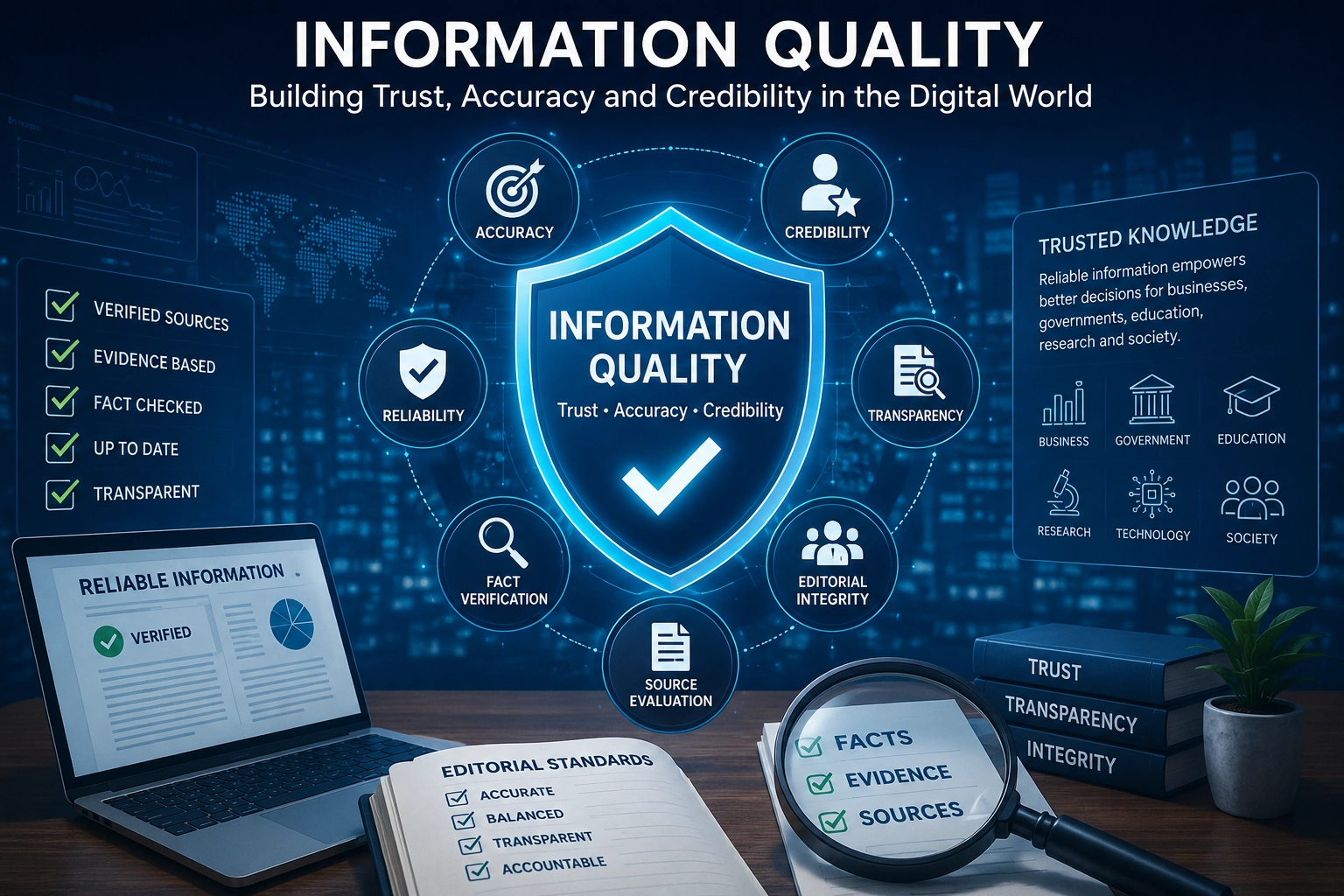
High-quality information typically demonstrates several characteristics:
- Clear authorship or organizational responsibility
- Transparent sourcing
- Logical reasoning supported by evidence
- Editorial consistency
- Context rather than isolated claims
- Regular updates when new evidence becomes available
Media literacy encourages readers to look beyond headlines and summaries to understand how information was created, reviewed, and presented.
Credibility Begins Long Before a Reader Clicks
Every published article represents a chain of decisions.
Editors determine scope, writers verify information, reviewers identify weaknesses, and publishers establish editorial standards that guide the final publication. These processes shape whether readers receive balanced, accurate, and useful information.
Credibility therefore depends not only on what is written but also on how the content reached publication.
Questions worth considering include:
- Who produced the information?
- Why was it published?
- Does the publication demonstrate editorial accountability?
- Are claims presented with appropriate context?
- Can important statements be independently verified?
Readers who consistently ask these questions develop stronger judgment across every digital platform they use.
Editorial Integrity as the Foundation of Public Trust
Editorial integrity is the commitment to accuracy, transparency, fairness, and responsible publishing.
Reliable publications distinguish between verified facts, expert interpretation, and opinion. They correct meaningful errors, update evolving information, and avoid presenting uncertainty as certainty.
Editorial integrity also requires:
Transparent Attribution
Reliable publications identify where information originates whenever possible. Readers should understand whether content is based on official documentation, expert analysis, firsthand reporting, or established knowledge.
Consistent Editorial Standards
Quality publishing is built on repeatable processes rather than individual opinion. Consistency allows readers to develop confidence in an organization’s editorial practices over time.
Accountability
Trustworthy publishers remain accountable for what they publish. Accountability includes corrections, revisions, and maintaining clear responsibility for published material.
These principles contribute directly to long-term public trust.
Critical Thinking in an Algorithm-Driven Information Environment
Modern digital platforms prioritize relevance, engagement, personalization, and speed.
Although these systems improve content discovery, they cannot replace human judgment.
Critical thinking enables readers to ask questions that algorithms cannot answer:
- Does this claim make logical sense?
- Is important context missing?
- Could alternative explanations exist?
- Is the evidence stronger than the conclusion?
- Does emotional language replace factual support?
Rather than accepting information because it appears popular or widely shared, media-literate readers evaluate the quality of reasoning behind every claim.
Understanding the Difference Between Error, Misinformation and Disinformation
Not all inaccurate information has the same origin.
An honest mistake differs significantly from intentionally deceptive content.
Honest Errors
Information may become inaccurate because evidence changes, facts are misunderstood, or reporting occurs before complete verification.
Responsible publishers acknowledge and correct these situations.
Misinformation
Misinformation refers to inaccurate information shared without an intention to deceive. Individuals often distribute misleading content because they believe it to be true.
Disinformation
Disinformation involves intentionally creating or distributing false or manipulated information designed to mislead audiences.
Recognizing these distinctions helps readers evaluate both the content and the surrounding context rather than making assumptions based solely on accuracy.
AI-Generated Content Raises New Verification Challenges
Artificial intelligence has dramatically expanded the speed and scale of digital publishing.
AI systems can summarize information, draft articles, translate languages, generate images, and assist with research. These capabilities improve productivity but also introduce new verification responsibilities.
AI-generated material may contain:
- Incomplete context
- Incorrect interpretations
- Fabricated references
- Outdated information
- Overconfident language despite uncertainty
Media literacy increasingly requires evaluating not only human-produced content but also AI-assisted publications.
Readers should focus on whether information can be independently verified rather than assuming accuracy based on polished presentation.
Digital Platforms Reward Visibility, Not Necessarily Accuracy
Popularity should never be confused with credibility.
Content that receives significant engagement is not automatically more reliable than information viewed by smaller audiences.
Recommendation systems often optimize for user interaction rather than factual quality. As a result, emotionally charged headlines, simplified explanations, or sensational claims may receive disproportionate visibility.
Media literacy encourages readers to evaluate content independently of popularity metrics such as:
- Views
- Likes
- Shares
- Comments
- Trending status
Evidence remains more valuable than visibility.
Source Diversity Produces Better Understanding
No single publication can provide complete coverage of every topic.
Comparing multiple credible sources helps readers identify:
- Areas of agreement
- Differences in interpretation
- Missing context
- Evolving evidence
- Specialized expertise
Diverse perspectives improve understanding without requiring readers to treat every opinion as equally credible.
Effective knowledge discovery relies on comparison rather than dependence on a single information source.
Information Verification Is a Practical Habit, Not a Specialized Profession
Verification does not require investigative expertise.
Small habits dramatically improve information quality.
Consider verifying:
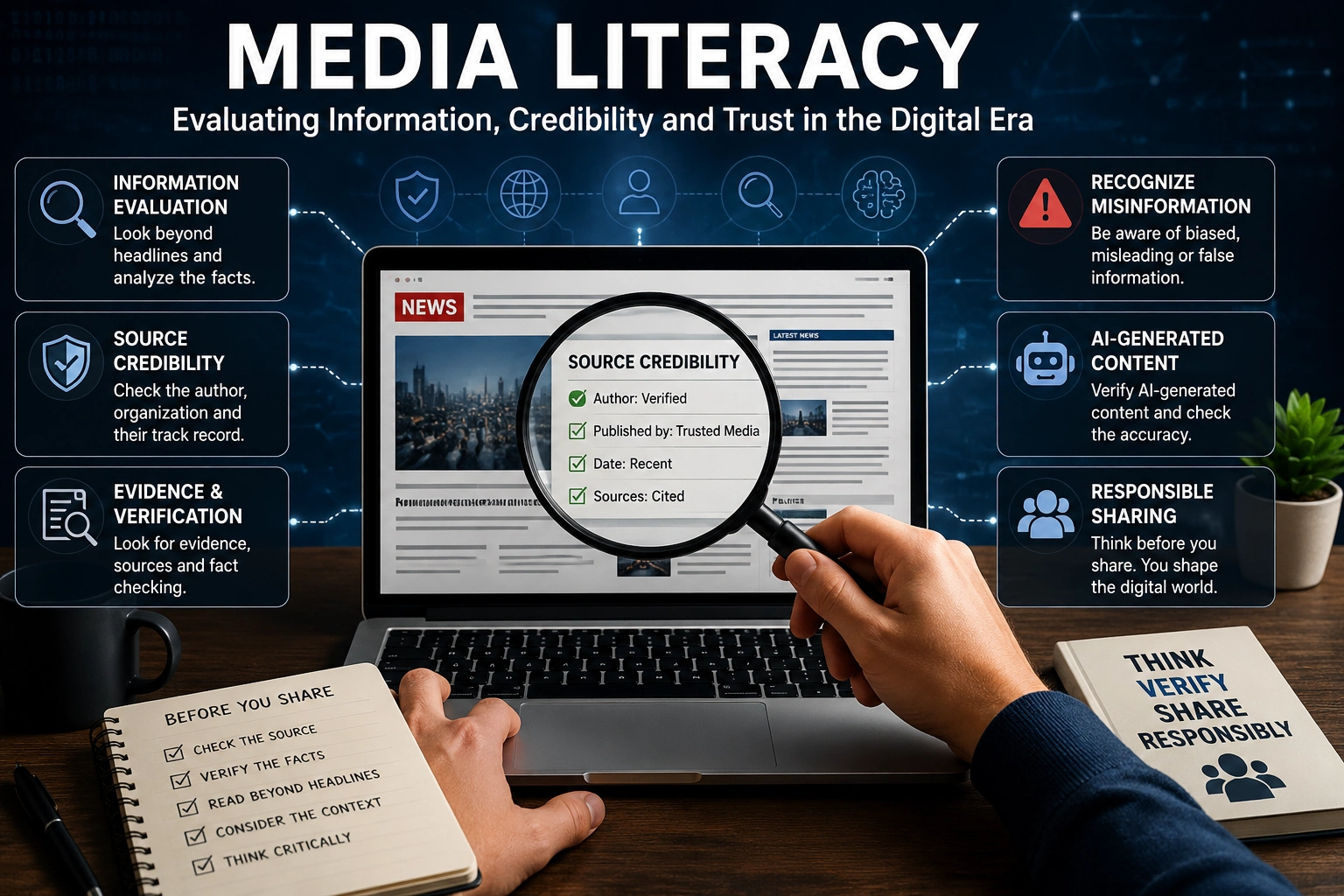
- Publication date
- Original source
- Supporting evidence
- Expert attribution
- Consistency with established knowledge
- Whether additional reputable sources report similar conclusions
These practices reduce the likelihood of accepting inaccurate or misleading information.
Fact checking becomes most effective when performed before information is shared rather than afterward.
Responsible Information Consumption Shapes Digital Society
Every online interaction contributes to the broader information ecosystem.
Sharing unverified material can amplify confusion, while responsible evaluation strengthens public understanding.
Responsible information consumption includes:
- Reading beyond headlines
- Distinguishing facts from opinions
- Considering context before sharing
- Recognizing uncertainty
- Updating beliefs when better evidence emerges
- Respecting credible expertise
These behaviors strengthen digital citizenship and encourage healthier online communities.
Media Literacy Supports Better Decisions Across Everyday Life
Media literacy extends well beyond news consumption.
People regularly evaluate information when making decisions about:
- Technology adoption
- Artificial Intelligence tools
- Business strategy
- Financial planning
- Health information
- Education
- Product research
- Online safety
In every case, stronger evaluation skills improve evidence-based decision making while reducing unnecessary risk.
Trust Is Built Through Process, Not Assumption
Trustworthy information rarely depends on a single characteristic.
Instead, trust emerges from multiple reinforcing elements:
- Reliable editorial practices
- Transparent sourcing
- Evidence-based reasoning
- Consistent quality
- Independent verification
- Clear accountability
- Ongoing corrections when appropriate
Readers who understand these foundations become better equipped to navigate an increasingly complex digital environment.
Media literacy ultimately shifts attention away from asking whether information feels convincing and toward asking whether it deserves confidence.
Frequently Asked Questions
Why is media literacy becoming more important in the age of AI?
AI enables information to be created and distributed at unprecedented speed. Media literacy helps readers verify accuracy, evaluate sources, distinguish verified information from generated content, and make informed decisions regardless of how the content was produced.
Does media literacy require checking every source manually?
Not always. The goal is proportional evaluation. Everyday information may only require a quick credibility check, while important decisions involving health, finance, education, or business deserve deeper verification using multiple reliable sources.
Can search engine rankings determine whether information is trustworthy?
No. Search engines organize information using many signals, but high visibility alone does not guarantee accuracy or editorial quality. Readers should still evaluate evidence, source credibility, and publication standards.
How does media literacy improve digital citizenship?
Media literacy encourages responsible sharing, respectful discussion, critical thinking, and evidence-based decision making. These practices strengthen public trust and contribute to a healthier digital information environment.